Compounded vs Brand-Name GLP-1s: What the Terms Mean
FDA-approved products and pharmacy-compounded versions are regulated, supplied and priced differently. A plain-English glossary.
Content last reviewed 18 September 2026
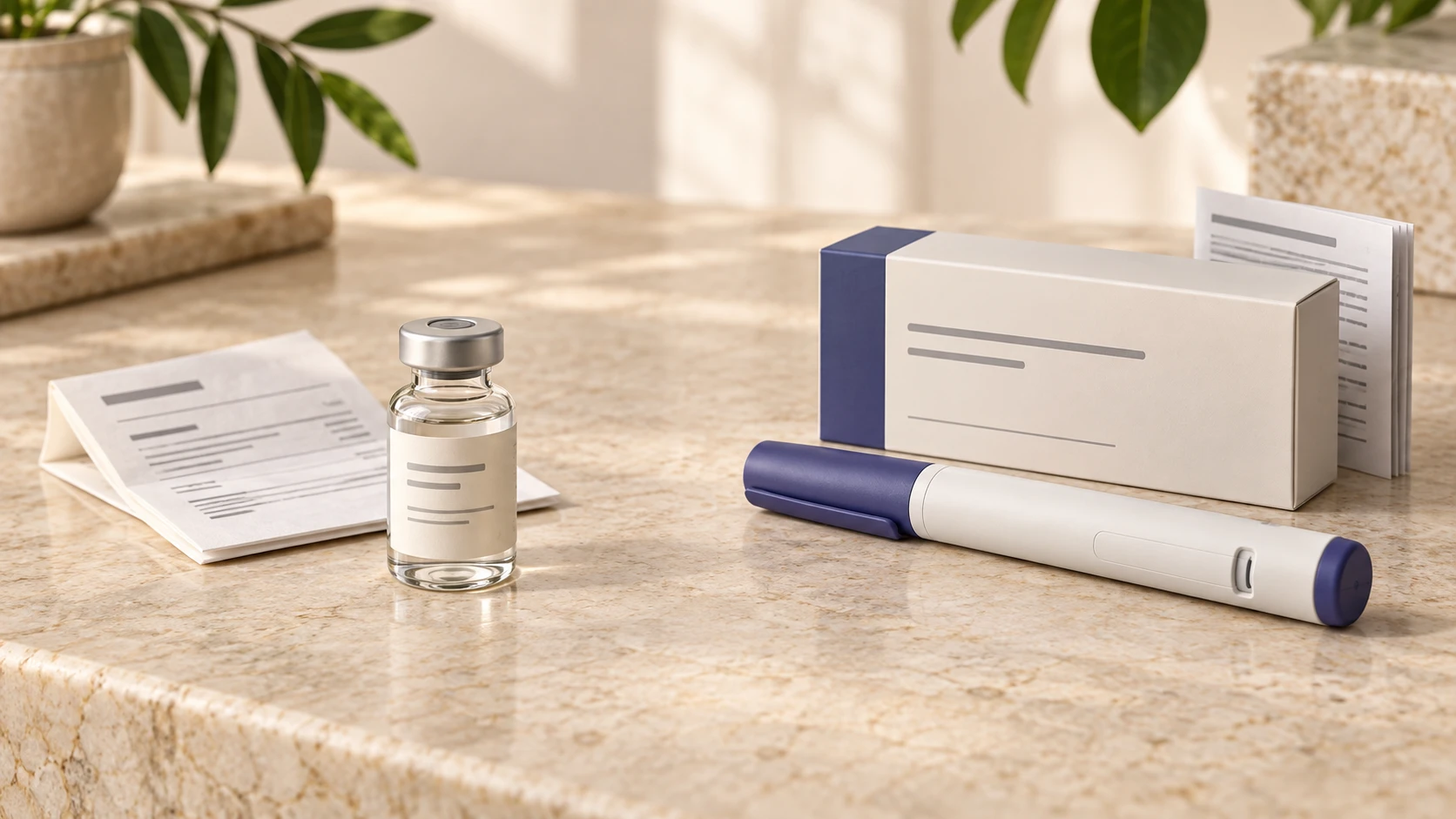
Telehealth programs offer two broad kinds of GLP-1 medication: FDA-approved brand-name products, and compounded versions prepared by a pharmacy. They are regulated differently, priced differently, and not interchangeable in the way a generic is. This guide explains the terms so you can read a program’s offer clearly. Which medication, if any, is appropriate for you is a decision for a licensed clinician.
Glossary
- Semaglutide: the active ingredient in Ozempic, Wegovy and Rybelsus.
- Tirzepatide: the active ingredient in Mounjaro and Zepbound. It acts on GLP-1 and GIP receptors.
- FDA-approved: the specific finished product has been reviewed by the FDA for safety, effectiveness and manufacturing quality for a stated use.
- Compounded: a medication prepared by a licensed pharmacy or outsourcing facility for patients, outside the FDA approval process.
- 503A pharmacy / 503B outsourcing facility: the two legal categories of compounder. 503A pharmacies compound for individual prescriptions under state oversight; 503B facilities register with the FDA and follow stricter manufacturing standards.
- Generic: an FDA-approved copy of a brand-name drug. A compounded medication is not a generic.
The key difference
Compounded GLP-1s are not FDA-approved finished products. The FDA does not review compounded medications for safety, effectiveness or quality before they reach patients. Brand-name products have been through that review, come in manufacturer-filled pens or tablets, and have fixed labelled doses.
Compounded versions are usually supplied in a vial with syringes, so you draw up each dose yourself. The FDA has reported dosing errors linked to this, so follow your prescriber’s instructions exactly and ask if the units are unclear. Compounded products may also include added ingredients, and the FDA has raised concerns about certain salt forms of semaglutide that are not the same active ingredient as the approved drug.
| Brand-name | Compounded | |
|---|---|---|
| FDA-approved product | Yes | No |
| Typical form | Pre-filled pen or tablet | Vial and syringe; some oral forms |
| Typical self-pay price | Higher; manufacturer self-pay offers and insurance may reduce it | Usually lower |
| Insurance | Sometimes covered, often with prior authorisation | Generally not covered |
| Availability | Subject to supply and coverage | Depends on current federal and state rules |
Availability can change
Pharmacies were able to compound these medications widely while the brand-name products were on the FDA’s drug shortage list. The FDA determined the tirzepatide shortage resolved in December 2024 and the semaglutide shortage resolved in February 2025, which narrowed the circumstances in which compounding is permitted. Rules, enforcement and court cases in this area are still moving. In practice this means a compounded option offered today could be changed or withdrawn, and a program may move you to a different product or price. Ask a program what would happen to your plan if that occurred.
Questions worth asking a program
- Is this medication FDA-approved or compounded?
- Which pharmacy dispenses it, where is it licensed, and is it a 503A pharmacy or a 503B facility?
- What exactly is in the vial: the base active ingredient, and any added ingredients?
- How is the dose measured, and what support is there for dosing questions?
- What happens to my price and prescription if this compounded product stops being available?
Neither category is automatically the right one. Some people prioritise an FDA-approved product; others prioritise cost and accept the trade-offs with their clinician’s guidance. On DoIQualify we label compounded options wherever they appear in the compare table and reviews, and we record whether each program names its pharmacy. See how we rank, and our guide to oral vs injectable options.
Sources
- FDA: FDA’s Concerns with Unapproved GLP-1 Drugs Used for Weight Loss. Source for: compounded drugs are not FDA-approved or reviewed for safety, effectiveness or quality; reports of dosing errors with compounded injectable semaglutide; salt forms are different active ingredients. Page current as of 1 September 2026. Accessed 19 September 2026.
- FDA: FDA clarifies policies for compounders as national GLP-1 supply begins to stabilize. Source for: tirzepatide injection shortage determined resolved 19 December 2024; semaglutide injection shortage determined resolved 21 February 2025; restrictions on compounding copies of commercially available drugs. Page current as of 1 April 2026. Accessed 19 September 2026.
- FDA: Compounding and the FDA: Questions and Answers. Source for: a compounded drug is not a generic; outsourcing facilities are FDA-inspected and subject to CGMP requirements; section 503A pharmacies. Page current as of 16 September 2025. Accessed 19 September 2026.
Published prices, fees and terms side by side, with the date we last checked.
Compare programs → or take the free quiz →This article is informational and not medical advice. A licensed clinician makes every prescribing decision. We may earn a referral fee if you enrol through our links; it does not change scores or positions. Medical disclaimer · How we rank